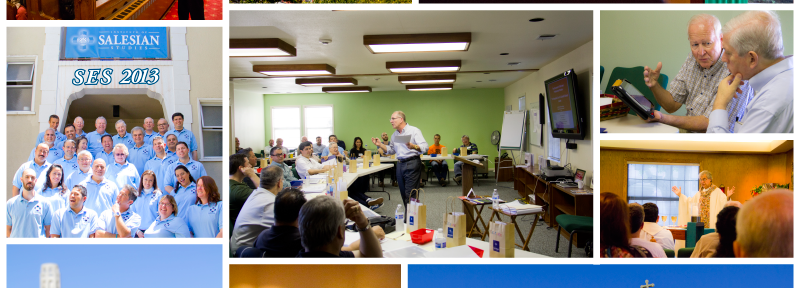
The Salesian Educational Seminar was held this year at Don Bosco Hall with a twist. Usually the SES is directed toward the “rank and file” members, the teachers and staff of the various schools. This year the inspiration came from the theme of the last Gen
eral Chapter, to “start afresh from Don Bosco.” It has been 25 years since the first SES session. That first meeting was directed towards the leadership of the schools, most of whom were professed SDBs. Times have changed and now the bulk of the school leadership is under lay collaboration. It was time to reflect, review, and reassess.
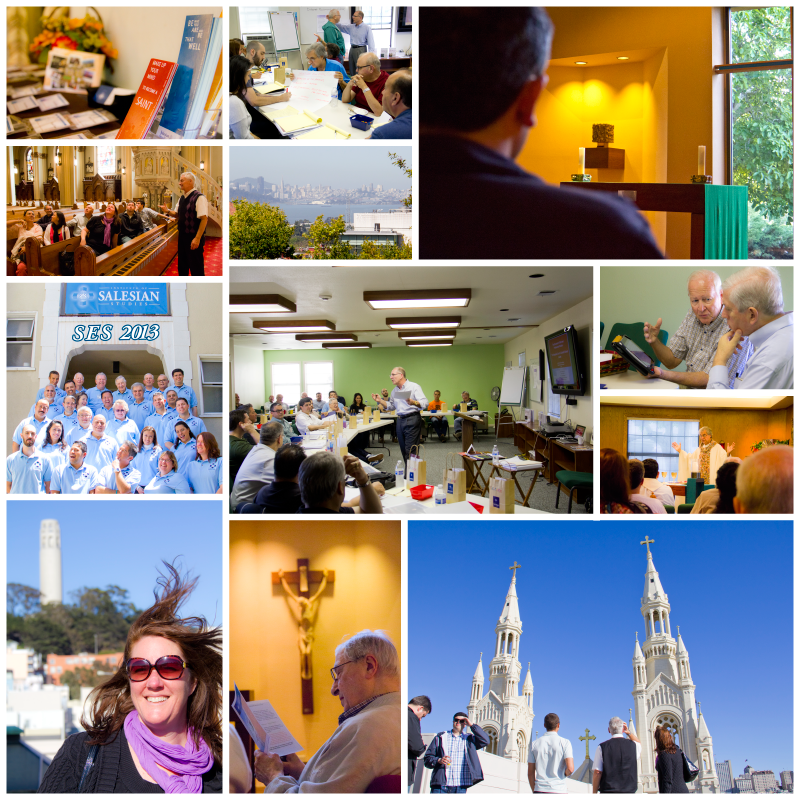
This year’s SES was created through the guidance of Dr. Jesse Rodriguez, as Program Coordinator of the “S” programs already used in lay formation in the province. The other members are Fr. Joe Boenzi, Fr. John Roche, Bill Goodman, Cris Rosales, Br. Al Vu, and Fr. Nick Reina. Through several meetings over the last six months this group was able to identify the essence of the mission of the early years of SES. This historical context provided us with a necessary narrative for us to re-imagine what we identified as “Salesian Formation for Educational Leadership.”
The 25 years has seen changes in the decline of professed SDBs and the emergence of new school leadership and organizational models both of which demanded asking the question: How do we operate a Catholic Salesian School in the 21st century?
The speakers for this SES incorporated educators with a larger view of education, rooted in Catholic identity and Salesian charism. Dr. Anthony Sabatino, our keynote
speaker, is an Assistant Professor at LMU, School of Education/Center for Catholic Education. He shared the new realities in Catholic Education and Leadership, asking those present to identify areas in our schools (who do we serve, what we do well and the challenges we face).
The second speaker, Fr. John Serio SDB, is the Coordinator of Schools from the Eastern Province. He connected the general Catholic educational culture to our own Salesian culture and heritage using the National Standards for Catholic Schools with the need to develop standards to sustain the Salesian vision of education for all of our schools. The question raised: What are the Salesian areas we need to share with those on our faculties and staffs?
The third speaker, Cris Hood-Rosales, is an educator from De La Salle High School and someone who had worked in several of our Salesian schools in various capacities. He offered some examples of developing specific standards for our faculties and staffs, allowing time for the participants to start the dialogue and define areas necessary to assure Salesian quality control in our schools. The group was also asked to identify areas for initial formation and on-going formation for our adult leaders.
As part of this session, Fr. Arthur Lenti had the opportunity to sit and speak to the gr
oup on the history of Don Bosco’s educational focus and what he felt was important for a Salesian animator.
Fr. Michael Sweeney, OP, the President of the Dominican School of Philosophy and Theology, and collaborator with the ISS program, finally presented a well-thought out link using our General Chapter documents in a theological vision of the present, lay collaborators as ecclesial ministers.
The group participants were reminded that this SES was the beginning of dialogue in envisioning a system of Salesian schools, recognizing the unique history of each and yet developing a close collaboration which will ensure that we mentor our adult leaders in a singular Catholic Salesian formation which will be the hallmark for our province.